
-
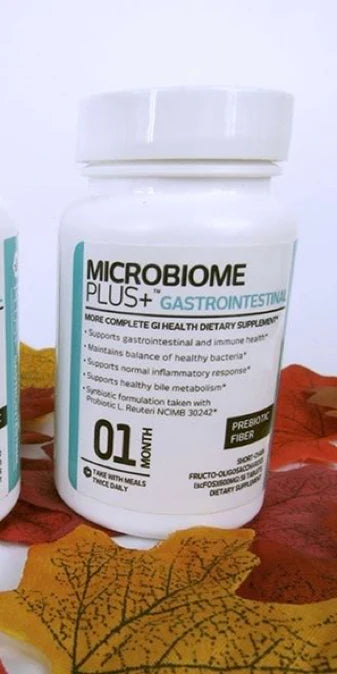
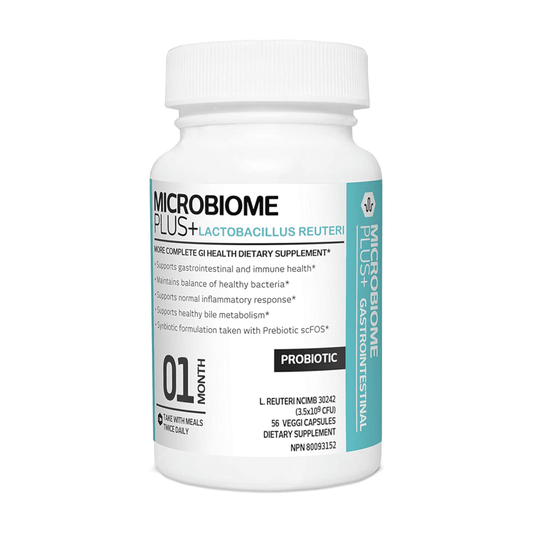
Lactobacillus Reuteri NCIMB 30242 | Microbiome Plus+
Heart Health Probiotic$48.99Regular priceUnit price per -
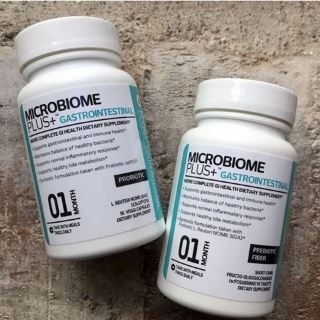
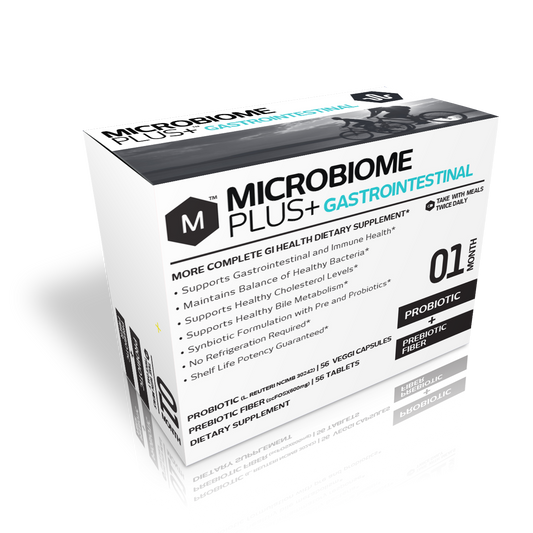
Probiotic Prebiotic for Heart Health & Bloating | Microbiome Plus+
L.reuteri NCIMB 30242 & scFOS Prebiotic$61.49Regular priceUnit price per -
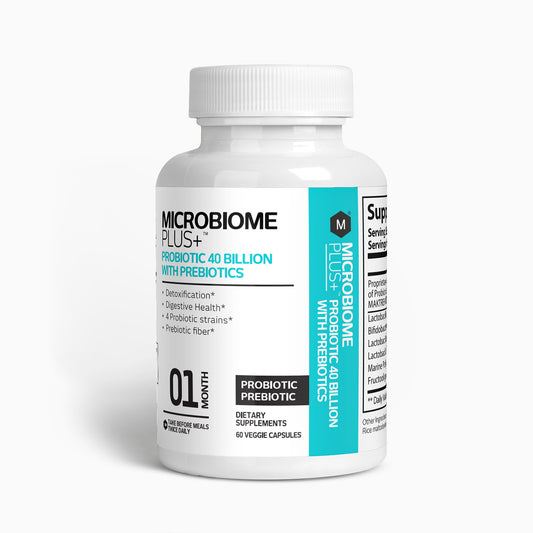
Probiotic 40 Billion CFU Blend with Prebiotics | Microbiome Plus+
Superior Gut Health$25.99Regular priceUnit price per
Collection: Best Probiotics for Gut Health: Shop Microbiome Plus+
Also known as the “good” bacteria that can keep your gut healthy and resilient, probiotics are live microorganisms that provide health benefits when taken at adequate amounts. However, not all probiotics are the same. To get the gut health benefits, you need to pick a clinically backed probiotic strain at the right dosage.
This collection page will walk you through the best probiotics for gut health from Microbiome Plus+, a leader in science-backed probiotics and dietary supplements for gut and microbiome health.*
How Do Probiotics Support Gut Health?
How Probiotics Work
Probiotics work by supplying your gut with beneficial live microbes. They can help reduce harmful gut bacteria, strengthen your gut barrier, help you better absorb nutrients from food, boost your gut’s immunity, and even support the balanced production of neurotransmitters and hormones in your body. 1
By doing so, probiotics support the health of your gut microbiome—the collection of microbes inhabiting your gut. In a nutshell, a healthy gut microbiome means effective digestion, gut comfort, a strong gut barrier, lower risk of infection, and efficient metabolism. A healthy gut is not only a gut that’s free from disease but a gut that functions optimally and doesn’t cause you any discomfort in the long run. 2
Certain probiotic strains may also have specific targeted benefits. For example, our L. reuteri NCIMB 30242 also supports normal cholesterol, bile acid, and vitamin D production.* 3–6
Therefore, different probiotics may work in different ways, but they usually all have one thing in common: they help your gut become healthier and stronger.
What To Look for in a Probiotic
Not all probiotics are created equal. The right formula comes down to strain, dose, and quality.
Here’s what to check before you buy:
✔ A Specific, Identified Strain
Probiotic benefits are strain-specific. Look for the full strain name (not just the species) on the label.
Example: The label should say L. reuteri NCIMB 30242, not just L. reuteri probiotic.
✔ A Clinically Studied Dose
CFU (colony forming unit) count should match levels used in human research. More isn’t always better.
Example: The label says 3.5 billion CFU/capsule, dosing 2 capsules daily. Clinical trials tested the same dose.
✔ Research-Backed Benefits
Look for published human studies supporting the product’s intended use. Avoid products with general claims about “gut health.”
✔ Guaranteed Potency
Quality probiotics protect live bacteria through shelf life and digestion, with clear storage guidance.
Quality & Safety Standards
Trustworthy probiotics also prioritize safety:
- GRAS (Generally Recognized as Safe) status from the U.S. Food and Drug Administration
- Allergen transparency
- Non-GMO sourcing
- Third-party testing for purity and potency
- When it comes to gut health, safety matters.
Every Microbiome Plus+ probiotic formula is selected with these standards in mind, so you can choose with confidence.
What the Research Shows
Probiotics are among the most widely studied supplements for gut health. Thousands of clinical trials have explored how specific probiotic strains support digestive balance and overall wellness. In fact, since 2010, roughly 100 new probiotic studies have been registered each year, with research continuing to grow. 7
Research suggests that certain probiotics may help support a healthy gut microbiome, promote digestive comfort, and maintain overall gut function. 8
A large 2025 review of 15 high-quality studies also found that probiotic use was associated with lower rates of digestive upset such as diarrhea, nausea, and stomach discomfort. 9
Probiotics have also been extensively studied for supporting gut balance during and after antibiotic use, helping the body recover from occasional digestive disturbances, and promoting comfort in people with sensitive digestion. 10,11
It’s important to remember that probiotic benefits are strain-specific, meaning not all probiotics work the same way. Results can also depend on the dose, the quality of the formulation, and whether the live cultures remain stable and active through shelf life.
The Bottom Line
With so many products and studies out there, choosing the right probiotic matters. Our formulas are carefully crafted, clinically studied, and designed to support your gut’s long-term health and comfort.
Discover our full range of clinically supported probiotics below.
Probiotics for Gut Health: What Works?
Below are probiotic strains from our probiotics line with the strongest research for helping to support and maintain digestive and gut microbiome health.*
Key Ingredients and Featured Formulas
L. reuteri NCIMB 30242

Microbiome Plus+ Lactobacillus Reuteri NCIMB 30242 LRC has been proven in human clinical trials to improve gastrointestinal health and gut microbiome diversity.*
Poor gastrointestinal health has been associated with an unhealthy gut microbiome, chronic inflammation, bile acid abnormalities, metabolic imbalances, and disrupted gut-brain communication. 12
Microbiome Plus+ Solutions:
Gut Health Action:
In a clinical trial of 127 people, L. reuteri NCIMB 30242 improved overall gastrointestinal health and symptoms of diarrhea, compared to placebo. 13
L. reuteri NCIMB 30242 is also armed with an enzyme called bile salt hydrolase (BSH), which releases free bile acids from their bound form. In the gut, free bile acids bind to cholesterol and reduce its absorption. 4
L. reuteri NCIMB 30242 also helps the liver produce more bile acids, supporting cholesterol breakdown, food digestion, the absorption of fat-soluble vitamins, and the production of hormones and vitamins. It also increases the production of mucin, a gel that coats and protects the gut lining, helps repair gut damage, and guards against inflammation. 14
Therefore, L. reuteri NCIMB 30242 is a clinically backed option for supporting overall gut health and gut lining integrity.
Added Benefits:
- Supports healthy cholesterol already in the normal range*
- Supports heart health and an already normal anti-inflammatory response in the body*
- Supports already normal vitamin D levels, naturally boosting 25-hydroxyvitamin D blood levels*
- Backed by almost 200 5-star customer reviews*
Probiotic with Prebiotic (Synbiotic)

Our L. reuteri NCIMB 30242 probiotic is formulated with a clinically backed prebiotic into a combo for those seeking extended, synbiotic benefits. The science is simple: the prebiotic feeds the probiotic, boosting gut health benefits.
Microbiome Plus+ Solutions:
Gut Health Action:
The prebiotic ingredient in our combo is short-chain fructooligosaccharides (scFOS), natural dietary fibers proven to aid in healthy bacterial growth and prevent the colonization and growth of “bad” gut bacteria. Also called a “probiotic booster,” scFOS directly supports gut microbiome, working together with L. reuteri NCIMB 30242 to achieve greater benefits than each ingredient alone. 15,16
Added Benefits:
- Supports weight control, a sense of fullness, and regular bowel movements*
- Backed by over 200 5-star customer reviews*
Multi-Strain Probiotic

Our multi-strain, advanced strength probiotic contains 4 probiotic strains and 2 prebiotics backed by research, packing 40 billion CFUs into one serving. It’s a powerful aid for restoring good gut bacteria and digestive health naturally.*
Microbiome Plus+ Solutions:
Gut Health Action:
L. acidophilus La-14 (Lactobacillus acidophilus La-14) has been thoroughly researched for helping with diarrhea, overall gut health, immunity, nutrient absorption, and fighting off infections.*
Bifidobacterium lactis Bl-04 supports good digestion and nutrient absorption, and its use is supported by over 20 published clinical trials.* 17
Lactobacillus plantarum Lp-115 has been studied for balancing gut and immune health.* 18
Lactobacillus paracasei Lpc-37 has been cited in more than 60 scientific publications, including over 18 clinical trials. It supports gut health and targets the gut–brain connection, boosting both gut and mental wellness.* 19
Prebiotics in this blend (Marine Polysaccharide Complex and FOS) boost probiotic benefits and help fuel healthy gut bacteria, support digestion, and enhance the absorption of vitamins and minerals.*
Added Benefits:
- Supports healthy vaginal flora and women’s health*
- Helps reduce feelings of occasional daily stress and anxiety*
- Supports sleep*
- Anti-allergy and respiratory support*
- Immune function support*
The Takeaway
Probiotics can be an evidence-backed way to boost your gut health.
Microbiome Plus+ offers clinically backed probiotics that help your gut feel more comfortable and your gut microbiome more balanced.*
Whether you choose L. reuteri NCIMB 30242, our Probiotic + Prebiotic Synbiotic, or the 40 Billion CFU Multi-Strain Blend, each formula is studied to work with your gut’s natural ecosystem, helping digestion, nutrient absorption, and overall wellness.*
Backed by research and thousands of satisfied users, Microbiome Plus+ probiotics provide a trusted way to support long-term gut health every day.*
Other Supplements for Gut Health
- Pro Digestive Enzyme Blend: natural and safe enzymes that calm bloating and gas and can be used alongside our probiotics
- Organic Moringa: a nutrient-rich superfood and natural digestive aid
-
Triple Immune - Reishi, Shitake, Maitake: all-around support for immunity, gut health, and digestion
How to Choose the Best Gut Health Probiotic for You
Considerations for Women
Women may benefit from probiotics that support digestive comfort, gut microbiome balance, nutrient absorption, and overall wellness:
- L. reuteri NCIMB 30242 – Supports gut lining integrity, digestive comfort, heart health, and healthy vitamin D levels.*
- Gastrointestinal Combo – Probiotic + Prebiotic – Adds a prebiotic “booster” to feed healthy gut bacteria, supporting regular bowel movements, weight control, and a sense of fullness.*
- Probiotic 40 Billion Blend with Prebiotics – Multi-strain support for digestion, gut-brain wellness, occasional stress relief, skin benefits, and healthy vaginal flora.*
Tip: Choose the formula that aligns with your goals, whether it’s targeted gut support, extended synbiotic benefits, or broad-spectrum digestive and mental wellness.*
Considerations for Men
Men may benefit from probiotics that support digestive comfort, cholesterol balance, gut microbiome diversity, and immune health:
- L. reuteri NCIMB 30242 – Supports healthy cholesterol already in the normal range, heart health, digestive comfort, and gut lining integrity.*
-
Gastrointestinal Combo – Probiotic + Prebiotic – Feeds healthy gut bacteria to enhance digestion and gut balance.*
-
Probiotic 40 Billion Blend with Prebiotics – Multi-strain support for digestion, nutrient absorption, immune function, daily stress management, and overall gut-brain wellness.*
Tip: Choose based on your priorities — whether that’s gut and heart health, extended synbiotic gut support, or broader multi-strain benefits.*
FAQs
What are signs you need a probiotic?
Everyone’s needs are different, but you may benefit from a probiotic if you struggle with:
- Occasional gut discomfort, bloating, or gas
- Irregular bowel movements or occasional constipation/diarrhea
- Using antibiotics frequently or recently
- Sensitive digestion after dietary changes or travel
- Catching colds frequently or feeling like your immune system could use support
Remember that probiotics can have specific benefits beyond gut health, and you should tailor your probiotic supplements to your unique health goals.
Do probiotics improve your gut health?
Yes — when taken in the right amount and consistently, probiotics can support a healthy gut. Each probiotic strain offers specific benefits, so choosing a formula that’s clinically studied for gut health helps ensure you get the most effective results.
What are the symptoms of an unhealthy gut?
Signs can include bloating, gas, irregular digestion, constipation or diarrhea, poor nutrient absorption, food sensitivities, and occasional fatigue or mood changes. Supporting your gut with the right probiotic may help maintain balance.*
How to tell if your gut is inflamed?
Gut inflammation can be tricky to notice because symptoms vary from person to person. Common signs include bloating, digestive discomfort, irregular bowel movements, and occasional fatigue or “brain fog.” If you’re unsure whether your gut is inflamed, consider working with a functional or integrative practitioner for a personalized assessment.*
How long do probiotics take to fix the gut?
Most probiotics take 2–4 weeks to achieve health benefits. Some strains may need to be taken for longer to notice the effects. Consistency is key.
What are signs your gut is healing?
Reduced bloating, more regular digestion, improved energy, fewer food sensitivities, and clearer mood are all signs your gut may be healing.*
Who should avoid taking probiotics?
Most healthy adults can safely take probiotics. Pregnant or breastfeeding women, children, people on certain medications, those with serious health conditions, or anyone with a weakened immune system should check with a healthcare professional before use.*
What not to mix with probiotics?
Many probiotics are sensitive to heat and acids. Avoid taking them with hot beverages, alcohol, or highly acidic foods like apple cider vinegar. For best results, take probiotics shortly before or with a light, fiber-rich meal.
While most people think that antibiotics and probiotics don’t go together, recent research proves otherwise. Probiotics can have important benefits alongside antibiotics, reducing their side effects on the gut—but this requires careful assessment. 20 If you’re taking antibiotics, consult your healthcare provider about the best regimen and probiotic strain to take.
References:
1. Latif A, Shehzad A, Niazi S, et al. Probiotics: Mechanism of action, Health Benefits and Their Application in Food Industries. Frontiers in Microbiology. 2023;14(14). doi:https://doi.org/10.3389/fmicb.2023.1216674
2. Van Hul M, Cani PD, Petitfils C, De Vos WM, Tilg H, El-Omar EM. What defines a healthy gut microbiome? Gut. 2024;73(11):1893-1908. doi:https://doi.org/10.1136/gutjnl-2024-333378
3. Jones ML, Martoni CJ, Parent M, Prakash S. Cholesterol-lowering efficacy of a microencapsulated bile salt hydrolase-active Lactobacillus reuteri NCIMB 30242 yoghurt formulation in hypercholesterolaemic adults. British Journal of Nutrition. 2011;107(10):1505-1513. doi:https://doi.org/10.1017/s0007114511004703
4. Jones ML, Martoni CJ, Prakash S. Cholesterol lowering and inhibition of sterol absorption by Lactobacillus reuteri NCIMB 30242: a randomized controlled trial. European Journal of Clinical Nutrition. 2012;66(11):1234-1241. doi:https://doi.org/10.1038/ejcn.2012.126
5. Jones ML, Martoni CJ, Prakash S. Oral Supplementation With ProbioticL. reuteriNCIMB 30242 Increases Mean Circulating 25-Hydroxyvitamin D: A Post Hoc Analysis of a Randomized Controlled Trial. The Journal of Clinical Endocrinology & Metabolism. 2013;98(7):2944-2951. doi:https://doi.org/10.1210/jc.2012-4262
6. Martoni CJ, Alain Labbé, Ganopolsky JG, Prakash S, Jones ML. Changes in bile acids, FGF-19 and sterol absorption in response to bile salt hydrolase active L. reuteri NCIMB 30242. Gut Microbes. 2015;6(1):57-65. doi:https://doi.org/10.1080/19490976.2015.1005474
7. Dronkers TMG, Ouwehand AC, Rijkers GT. Global analysis of clinical trials with probiotics. Heliyon. 2020;6(7):e04467. doi:https://doi.org/10.1016/j.heliyon.2020.e04467
8. Gul S, Durante-Mangoni E. Unraveling the Puzzle: Health Benefits of Probiotics—A Comprehensive Review. Journal of Clinical Medicine. 2024;13(5):1436-1436. doi:https://doi.org/10.3390/jcm13051436
9. Zeng Q, Li P, Wu H, et al. Probiotics and gastrointestinal disorders: an umbrella meta-analysis of therapeutic efficacy. European journal of medical research. 2025;30(1). doi:https://doi.org/10.1186/s40001-025-02788-w
10. Sebastián Domingo JJ. Review of the role of probiotics in gastrointestinal diseases in adults. Gastroenterología y Hepatología (English Edition). 2017;40(6):417-429. doi:https://doi.org/10.1016/j.gastre.2016.12.001
11. McFarland LV, Karakan T, Karatas A. Strain-specific and outcome-specific efficacy of probiotics for the treatment of irritable bowel syndrome: A systematic review and meta-analysis. EClinicalMedicine. 2021;41:101154. doi:https://doi.org/10.1016/j.eclinm.2021.101154
12. Jones ML, Martoni CJ, Ganopolsky JG, Labbé A, Prakash S. The human microbiome and bile acid metabolism: dysbiosis, dysmetabolism, disease and intervention. Expert Opinion on Biological Therapy. 2014;14(4):467-482. doi:https://doi.org/10.1517/14712598.2014.880420
13. Jones ML, Martoni CJ, Ganopolsky JG, Sulemankhil I, Ghali P, Prakash S. Improvement of gastrointestinal health status in subjects consuming Lactobacillus reuteri NCIMB 30242 capsules: apost-hocanalysis of a randomized controlled trial. Expert Opinion on Biological Therapy. 2013;13(12):1643-1651. doi:https://doi.org/10.1517/14712598.2013.833601
14. Shirazi T. Mucins and inflammatory bowel disease. Postgraduate Medical Journal. 2000;76(898):473-478. doi:https://doi.org/10.1136/pmj.76.898.473
15. Dou Y, Yu X, Luo Y, Chen B, Ma D, Zhu J. Effect of Fructooligosaccharides Supplementation on the Gut Microbiota in Human: A Systematic Review and Meta-Analysis. Nutrients. 2022;14(16):3298. doi:https://doi.org/10.3390/nu14163298
16. Xu X, Fu H, Quan H, et al. Effects of fructooligosaccharides and Lactobacillus reuteri on the composition and metabolism of gut microbiota in students. Food & Function. 2025;16(4):1562-1575. doi:https://doi.org/10.1039/d4fo03763d
17. Huuskonen L, Lyra A, Lee E, et al. Effects of Bifidobacterium animalis subsp. lactis Bl-04 on Skin Wrinkles and Dryness: A Randomized, Triple-Blinded, Placebo-Controlled Clinical Trial. Dermato. 2022;2(2):30-53. doi:https://doi.org/10.3390/dermato2020005
18. Liu YW, Liong MT, Tsai YC. New perspectives of Lactobacillus plantarum as a probiotic: The gut-heart-brain axis. Journal of Microbiology. 2018;56(9):601-613. doi:https://doi.org/10.1007/s12275-018-8079-2
19. Syahniar R, Wahid M, Yasmon A. The Role of Lacticaseibacillus paracasei as a Probiotic in Health. Journal of Pure and Applied Microbiology. Published online January 30, 2026. doi:https://doi.org/10.22207/JPAM.20.1.15Full
20. Fernández-Alonso M, Aguirre Camorlinga A, Messiah SE, Marroquin E. Effect of adding probiotics to an antibiotic intervention on the human gut microbial diversity and composition: a systematic review. Journal of Medical Microbiology. 2022;71(11). doi:https://doi.org/10.1099/jmm.0.001625
Written by Ana Aleksic, MSc (Pharmacy)
Ana is an integrative pharmacist, scientist, and herbalist with many years of medical writing, clinical research, and health advising experience. She loves communicating science and empowering people to achieve their optimal health. Ana has edited 1000+ and written 500+ posts, some of which reached over 1 million people. She has also authored several ebooks and book chapters. Her specialties are dietary and herbal supplements, women’s health, and human microbiome science. She is also a women's health coach and a strong advocate of bridging scientific knowledge with holistic medicine.
*These statements have not been evaluated by the Food and Drug Administration. This product is not intended to diagnose, treat, cure or prevent any disease.
Disclaimer: This page is for informational purposes only and is not meant to provide any medical advice. Please talk to your doctor about your health concerns and consult them before taking any supplements or making changes to your supplement regime.