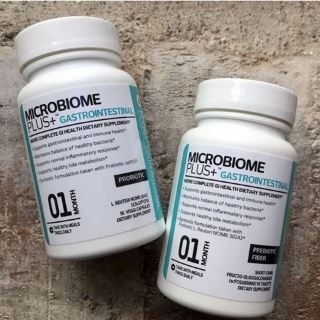

Taking a probiotic supplement without knowing which strain it contains is a bit like trying to find an address without a street number. Maybe the neighborhood is right, but you’re still lost.
Most probiotic benefits are tied to a specific probiotic strain at a specific dose (CFU count). Yet, many probiotic supplements don’t list strains, leaving you in the dark as to exactly what you’re taking. Once you learn why strains are so important and how to read probiotic labels to identify them, choosing a probiotic gets a lot easier.
Disclaimer: This post is for informational purposes only. Please discuss your health concerns with your care provider and consult them before taking any supplements to avoid disease and drug interactions.
What Are Strains in Probiotics?
Probiotics are living microorganisms, such as bacteria or yeast, that confer a health benefit on the host when administered in adequate amounts (Hill et al., 2014). This is the widely accepted definition of probiotics. What often gets missed is that many health benefits are tied to specific probiotic strains.
Probiotics are identified by their genus, species, and strain. Think of the genus, species, and strain as progressively narrowing an address. The strain is your street and door number. While the genus gives you the broadest location, the species narrows it down, and the strain identifies the specific microorganism. If you don't know the strain, you don't have the specific address.
Here are a couple of examples:
- Genus: Lacticaseibacillus
- Species: Lacticaseibacillus rhamnosus
- Strain: Lacticaseibacillus rhamnosus GG
Strain designations are a sort of tag that can contain a combination of letters and numbers. Just like your street address.
For example, our flagship probiotic for cholesterol and heart health support contains Lactobacillus reuteri NCIMB 30242. The species is Lactobacillus reuteri (L. reuteri for short), and the strain is NCIMB 30242.
- Genus: Lactobacillus
- Species: Lactobacillus reuteri*
- Strain: Lactobacillus reuteri NCIMB 30242, found in our heart health probiotic
*Lactobacillus reuteri has been reclassified as Limosilactobacillus reuteri in 2020. Probiotic labels commonly still use the old classification due to greater consumer familiarity.
Another example is Lacticaseibacillus paracasei Lpc-37, which has been clinically studied for supporting sleep and a healthy stress response (Patterson et al., 2020).
- Genus: Lacticaseibacillus
- Species: Lacticaseibacillus paracasei
- Strain: Lacticaseibacillus paracasei Lpc-37, found in our 40 billion blend
As you can see, if a probiotic label stops at the species level, you know the species but not which strain is in the product. That matters because evidence for one strain can’t be assumed to apply to every strain of the same species.
How to Read a Probiotic Label to Identify the Strain
You searched for a probiotic strain for a specific health goal. Then you picked up a bottle. Can you actually find that strain on the label?
Probiotic labels can be confusing. But once you know what to look for, the strain is usually easy to spot. Look for a tag at the end of the species name, such as GG, La-14, NCIMB 30242, BB-12, 299v, or Lp-115.
So here’s exactly what to look for on the label:
- Find the Supplement Facts panel.
- Look for the three-part name: genus, species, and a trailing combination of letters and/or numbers that identifies the strain.
For example:
Lactobacillus reuteri NCIMB 30242
Genus: Lactobacillus
Species: Lactobacillus reuteri
Strain tag: NCIMB 30242
The whole strain name is what you can paste into Google or PubMed when you want to find out what that specific strain has been studied for.

Image: L. reuteri NCIMB 30242 Supplement Facts
What if the strain isn't listed?
Unfortunately, many probiotic products contain blends without identifying the individual strains. You may see something as broad as “Bacillus coagulans” or “Lactobacillus blend” without a strain designation. This is a red flag.
In that case, you know the species, but you don't know which strain you're getting. And without knowing the strain, you can't connect the product to research on a particular strain.
This matters because different strains within the same species can have different characteristics and can be studied for different health outcomes. The same species can contain strains with totally different health effects, which is why scientists use the strain “tag.”
Going back to the address analogy: without the strain tag, you know roughly where you are, but you don't have the specific address. And when it comes to connecting a probiotic product to the science, that specificity matters.
It’s actually one of the main reasons why some people find that probiotics “didn’t work for them” and others swear by taking them: different strains.
What Else Should You Look For On a Probiotic Label?
Once you've identified the strain, there are a few other things worth checking on the label:
CFU count: How many live microorganisms does the product provide per serving? More isn't necessarily better. The appropriate dose depends on the specific strain and the health outcome being studied. Ideally, the product should contain the same dose/CFU count used in clinical research.
CFUs through expiration: Does the label guarantee the stated CFU count through the expiration date, or only at the time of manufacture?
Gut survival: Can the probiotic survive stomach acid and bile well enough to remain viable after you take it? Is there evidence that it reaches the intestines or colon, where it is expected to act?
Health claims: Does the wellness claim match what the product or strain has been clinically tested for? You want to make sure the marketing isn't getting ahead of the evidence. If there's only animal evidence but the brand is making claims about benefits in humans, that's a red flag. If the product was tested only in IBD patients for gut comfort but it's making immune support claims, that's also a red flag.
Other ingredients: What else is included in the formulation? Was clinical research done on the whole formulation or only on some of the individual ingredients? This is especially important for multi-strain products and for products containing both prebiotics and probiotics.
Storage instructions: Are there specific temperature or storage requirements to maintain the product's quality and viability?

Answering these questions will help you pinpoint what you're taking, how much you're taking, and whether that specific strain and dose have been studied for the wellness goal you're interested in.
Are Probiotic Effects Strain-Specific?
Yes. For the most part, probiotic effects are strain-specific. Probiotic research is often done on specific strains, not on an entire species. One systematic review concluded that “strong evidence was found supporting the hypothesis that the efficacy of probiotics is both strain-specific and disease-specific” (McFarland et al., 2018).
This means that two different strains of the same species can’t be assumed to have the same health benefits. If a clinical study shows a benefit with one strain, that doesn’t mean another strain of the same species will have the same effects.
Think of it this way: just as different varieties of the same plant can produce different compounds, probiotic strains within the same species can differ in important characteristics. They can interact differently with the gut, produce different enzymes and metabolites, and have different biological effects.
To understand whether a probiotic can produce a particular effect, researchers need to know exactly which microorganism they are studying. This is why strain identification matters. Once a strain has been identified, researchers can study it at different doses and evaluate specific outcomes in clinical trials.
The differences between strains can be huge. For example, consider three strains of Lactobacillus reuteri:
- L. reuteri NCIMB 30242 has been clinically studied in adults for its effects on heart health, including supporting normal LDL cholesterol levels (Jones et al., 2012)
- L. reuteri DSM 17938 has been studied for outcomes related to infant colic (Savino et al., 2010)
- L. reuteri ATCC PTA 6475 has been investigated for effects on testosterone, but the evidence for testosterone-related effects is from animal research, while it didn’t seem to affect testosterone in human studies (Ljunggren et al., 2024).
That’s why you need to know the strain, especially when you’re looking to understand what a probiotic may be good for. One strain may have evidence for a particular gut outcome, while another strain of the same species may have been studied for eczema or mood support.
A combination of strains may also be tested in clinical trials for specific effects. In that case, the whole multi-strain formulation carries the potential benefits. Another product that contains just one strain from that combination may not carry the same benefits.
There is an important nuance here: not every potential probiotic effect is strain-specific. Some broader benefits may come from the species. But when you're evaluating a specific health claim, the most useful question is: What evidence exists for the specific strain, dose, formulation, and outcome?
Knowing the strain gives you a way to connect the probiotic in the bottle to the evidence behind it.
What Are Strain-Specific Probiotics?
Strain-specific probiotics are products that identify the specific bacterial or yeast strains they contain. They are chosen for targeted health benefits rather than general wellness action, and they can contain a single strain or multiple strains.
What are single-strain probiotics?
Single strain probiotics contain only one strain in a product. They usually target supporting a specific wellness benefit, such as cholesterol balance, weight management support, sleep and stress, vaginal health, skin health, etc.
People often choose for their simplicity and specific wellness action. Healthcare practitioners tend to recommend them for the same reasons, according to a study of hospital pediatricians (Kesavelu Sr et al., 2025).
What are multi-strain probiotics?
Multi-strain probiotics contain two or more probiotic strains in a product. They may have synergistic or broader health benefits.
People who are seeking several health benefits in one product or those looking for general wellness support tend to go with multi-strain probiotics, often combined with prebiotics.
Is it better to have more strains in probiotics?
No, a probiotic containing multiple strains is not automatically better than a single-strain probiotic.
Research is divided on whether single or multi-strain probiotics are better. This may depend on the specific formulation and the evidence behind it. For example, a multi-strain probiotic backed by five clinical studies may be a smarter choice than a single-strain probiotic backed by a single clinical trial for the same health benefit, and vice versa.
On the whole, though, multi-strain probiotics don’t seem to be superior to single-strain ones. One meta-analysis of 65 randomized-controlled trials (41 involving single strains, 22 involving multi-strain mixtures, and 2 comparing single strains to mixtures) suggested that single-strain probiotics were similar to mixtures. In most cases, multi-strain probiotics did not have greater efficacy than single-strain probiotics (McFarland., 2021).
10 billion vs. 50 billion: Is More CFUs Better?
Walk into a pharmacy or health food store and you'll quickly see probiotic products boasting billions of CFUs. But does 50 billion CFUs make a probiotic five times better than one with 10 billion?
The simple answer is no. At least not necessarily.
When it comes to probiotics, more CFUs don't automatically mean greater benefits. The dose that matters depends on the specific strain, formulation, and health outcome being studied.
For example, if a clinical trial found that a particular strain produced a benefit at 10 billion CFUs per day, taking 50 billion doesn't necessarily mean you'll get a greater benefit. And if a strain was studied at 50 billion CFUs, a product containing 10 billion may not provide the same dose used in the research.
That's why CFU count should be considered alongside the strain and the evidence behind it.
Also, a generic blend containing 50 billion CFUs of probiotics without strain tags is practically useless if you’re trying to determine what the product may actually do, especially if the particular formulation has not been clinically studied. That’s unfortunately the case with many 50 billion blends on store shelves.
Next time you're in a pharmacy or health food store, or shopping online, take a closer look at one of those 50 billion blends and check the Supplement Facts. Now that you know how to identify strain tags, you won't be surprised to see that many don't list any.
You have the city, but not the address. Without a strain tag, most of these 50 billion products are giving you an impressive number, but no way to know exactly which strain you're getting or what it's been studied for.
Once you realize this, choosing a probiotic gets a lot easier. It's one of those things that, once you see it, you can't unsee it.
At Microbiome Plus+, our 40 billion blend contains four characterized probiotic strains that have been studied for supporting specific wellness outcomes. Our single-strain probiotic L. reuteri NCIMB 30242 is clinically backed by seven clinical studies for cholesterol balance, heart health, healthy vitamin D levels, and gut health support.
We believe consumers should be able to see exactly which probiotic strains they're getting and understand the science behind them.
So, instead of going for the blend with the highest billions of CFUs, go for a probiotic that contains a specific strain at a dose used in clinical research for the wellness outcome you’re after.
References:
Binda, S., Hill, C., Johansen, E., Obis, D., Pot, B., Sanders, M. E., Tremblay, A., & Ouwehand, A. C. (2020). Criteria to qualify microorganisms as “probiotic” in foods and dietary supplements. Frontiers in Microbiology, 11. https://doi.org/10.3389/fmicb.2020.01662
Jones, M. L., Martoni, C. J., Parent, M., & Prakash, S. (2011). Cholesterol-lowering efficacy of a microencapsulated bile salt hydrolase-activeLactobacillus reuteriNCIMB 30242 yoghurt formulation in hypercholesterolaemic adults. British Journal of Nutrition, 107(10), 1505–1513. https://doi.org/10.1017/s0007114511004703
Kesavelu, D., Yadav Krishnamurty, A., & A, P. (2025). Single strain vs multiple strain probiotics: The clinician’s choice. Cureus. https://doi.org/10.7759/cureus.86353
Ljunggren, L., Butler, E., Axelsson, J., Åström, M., & Ohlsson, L. (2024). Effects of probiotic supplementation on testosterone levels in healthy ageing men: A 12-week double-blind, placebo-controlled randomized clinical trial. Contemporary Clinical Trials Communications, 39, 101300. PubMed Central. https://doi.org/10.1016/j.conctc.2024.101300
McFarland, L. V. (2021). Efficacy of single-strain probiotics versus multi-strain mixtures: Systematic review of strain and disease specificity. Digestive Diseases and Sciences, 66(3), 694–704. PubMed. https://doi.org/10.1007/s10620-020-06244-z
McFarland, L. V., Evans, C. T., & Goldstein, E. J. C. (2018). Strain-specificity and disease-specificity of probiotic efficacy: A systematic review and meta-analysis. Frontiers in Medicine, 5(124). https://doi.org/10.3389/fmed.2018.00124
Patterson, E., Griffin, S. M., Ibarra, A., Ellsiepen, E., & Hellhammer, J. (2020). Lacticaseibacillus paracasei Lpc-37® improves psychological and physiological markers of stress and anxiety in healthy adults: A randomized, double-blind, placebo-controlled and parallel clinical trial (the sisu study). Neurobiology of Stress, 100277. https://doi.org/10.1016/j.ynstr.2020.100277
Savino, F., Cordisco, L., Tarasco, V., Palumeri, E., Calabrese, R., Oggero, R., Roos, S., & Matteuzzi, D. (2010). Lactobacillus reuteri DSM 17938 in infantile colic: A randomized, double-blind, placebo-controlled trial. Pediatrics, 126(3), e526-33. PubMed. https://doi.org/10.1542/peds.2010-0433

Ana Aleksic, MSc Pharm
Ana is an integrative pharmacist, scientist, and science communications specialist with many years of medical writing, clinical research, and health advising experience. She loves communicating science and empowering people to achieve their optimal health.
Ana has edited 1000+ and written 500+ posts, some of which reached over 1 million people. She has also authored several ebooks and book chapters. Her specialties are dietary and herbal supplements, women’s health, probiotics, and human microbiome science. She is also a women's health coach and a strong advocate of bridging scientific knowledge with holistic medicine.