Bloating is uncomfortable, distracting, and—let’s be honest—something most of us don’t want to talk about. Often, it signals that nutrient breakdown or gut balance may be off. Instead of ignoring it, you can support your digestion with the right supplements.
Microbiome Plus+ is a leader in science-backed probiotics and dietary supplements for gut health, heart health, and overall wellness. Our digestive enzyme and probiotic formulas are designed to support digestive comfort, nutrient breakdown, and a balanced microbiome, using clinically supported, non-GMO, and sustainably sourced ingredients.*
Bloating? We’ve Got You Covered
Science-backed formulas for everyday comfort.
Our science-backed collection is designed to support:
-
Efficient nutrient breakdown with digestive enzymes*
-
A balanced gut microbiome with probiotics, prebiotics, and synbiotics*
-
Everyday digestive comfort with formulas gentle enough for daily use*
If your bloating is related to digestion or gut balance, targeted support can help you feel more comfortable throughout the day.*
Bloating 101
What Does Bloating Feel Like?
Recognize common signs of bloating.
Bloating is common, but when it happens daily, it can affect your comfort, energy, and overall quality of life. Feeling bloated after foods you normally tolerate can be especially frustrating.
Bloating often feels like pressure, fullness, or tightness in the abdomen, and some people also experience gas, discomfort, or visible distension. Bloating typically gets worse after eating, even if you’ve just had a small meal.
Even if your abdomen doesn’t look swollen, the sensation can still feel intense. Research shows that bloating is more about the perceived increase in abdominal pressure than how much distension is actually present (1).
How Common Is Bloating?
How often people experience bloating.
Bloating is a daily reality for nearly one in seven adults in the US(2).
If you’re a woman or already deal with digestive concerns, you’re even more likely to experience bloating and more pronounced symptoms (2).
What Causes Bloating?
The most common digestive and lifestyle triggers linked to bloating.
Bloating can have many causes, but most cases trace back to digestion, the gut microbiome, and everyday habits. The most common contributors include (1,3,4):
- Food sensitivities
- Constipation
- Gut microbiome imbalance
- Hormonal changes
These factors often overlap. For example, constipation, food sensitivities, and microbiome imbalance can interact and worsen bloating.
Other causes include medication side effects, swallowing air, digestive disorders, stress, overeating, weight gain, and sugar alcohols (often found in foods, supplements, and medications).
How Supplements May Help*
Why probiotics, synbiotics, and enzymes are commonly used for bloating.
Mild or occasional bloating often happens when digestion slows and food isn’t broken down efficiently, allowing gas to build up in the intestines. This can happen even when you’re eating well.
Common supplement categories that support digestive comfort include:
-
Digestive enzymes to help break down proteins, fats, and carbohydrates*
-
Probiotics to help maintain a balanced gut microbiome*
-
Prebiotics to nourish beneficial gut bacteria*
When to See a Doctor
How to know if you need medical evaluation.
Frequent or severe bloating may be a symptom of a gastrointestinal problem that requires medical attention. Medical conditions that can cause bloating include (1,3):
- Irritable Bowel Syndrome (IBS)
- Celiac disease
- Small intestinal bacterial overgrowth (SIBO)
- Functional dyspepsia (FD)
- Gastroesophageal reflux disease (GERD)
Persistent, severe, or unexplained bloating should be evaluated by a healthcare professional. Bloating can occasionally be linked to more serious conditions.
Remember, most causes of bloating aren’t serious and you can often find relief with the right nutrition, supplements, and lifestyle choices.
How to Fix Gut Health and Stop Bloating?
What you can do to support digestion and reduce discomfort.
While there’s no single “fix,” supporting your gut health can make a meaningful difference in how often you feel bloated.
For most people, bloating comes down to digestion, gut microbiome balance, hydration, stress, and how the body responds to certain foods. Hormonal changes, such as during your period or pregnancy, can also contribute.
A helpful first step is identifying your personal triggers. Consider tracking:
- Foods that make your bloating better or worse
- Times in your cycle when symptoms increase
- How stress, sleep, or skipping movement affects you
- Whether symptoms appear after specific ingredients (e.g., dairy or sugar alcohols)
To wrap up, knowing what triggers your bloating makes it easier to find the best supplements and routines to support digestion and reduce discomfort.
Bloating & Digestive Support: Key Ingredients & Featured Formulas
What helps your gut feel its best.
Key Ingredients That Support Digestion & Gut Health
Digestive Enzymes
Help break down proteins, fats, and carbs for comfortable digestion.*
- Protease, Lipase, Lactase, Bromelain, Papain, Alpha-Galactosidase
- Support nutrient absorption and reduce occasional bloating*
Prebiotic Fiber
Feeds beneficial gut bacteria and supports regularity.*
- Short-chain fructooligosaccharides (scFOS)
- Supports gut microbiome balance and overall digestive health*
Probiotics and Synbiotics
Encourage a balanced gut microbiome and promote digestive comfort.*
-
Lactobacillus reuteri NCIMB 30242: researched for gut microbiome support, bile acid balance, and occasional bloating relief*
- Multi-strain synbiotic blends: support gut, immune, and digestive health*
Microbiome Plus+ Featured Formulas & Why We Chose Them
Our top formulas combine clinically backed ingredients to target bloating, support digestion, and boost your gut microbiome health.
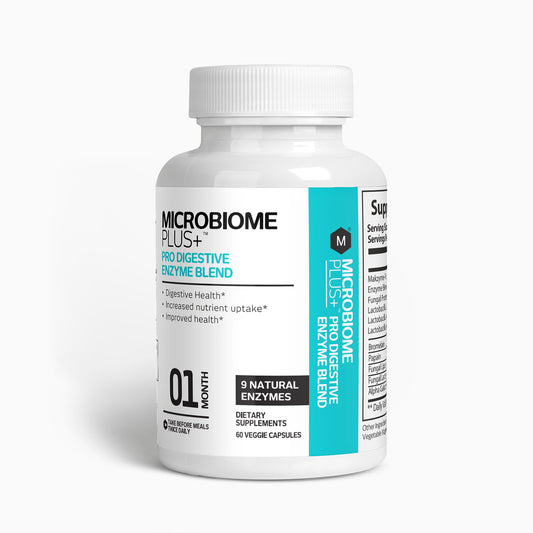
Why we love it: 9 natural enzymes plus probiotics work together to support digestion and help ease occasional bloating.*
Who it’s for: People with lower digestive enzyme levels due to aging, stress, or lifestyle factors, or those sensitive to gluten or lactose.*
Quality you can trust: Vegan, made in a cGMP-registered facility in the USA.*
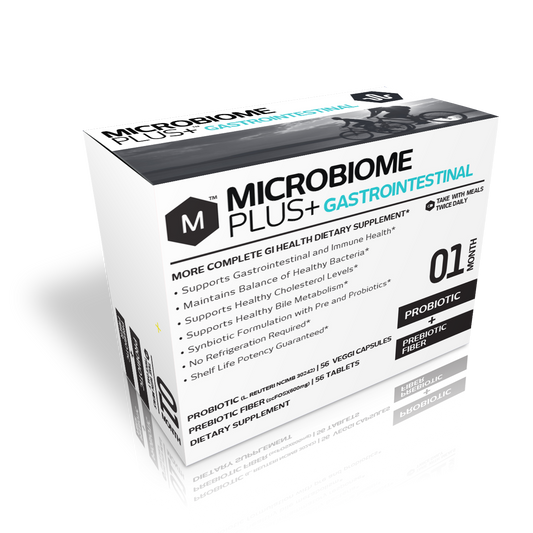
Why we love it: Clinically studied probiotic strain backed by 7 trials, paired with prebiotics to enhance benefits. Supports digestion, gut balance, and heart health, and may help optimize vitamin D levels.*
Who it’s for: Anyone seeking gut support and digestive comfort.*
Quality you can trust: Shelf-stable GRAS strain, allergen-free, third-party tested, made in the USA.*
Why we love it: Offers the same benefits as the combo product but without scFOS fiber.*
Who it’s for: People who may be sensitive to scFOS*
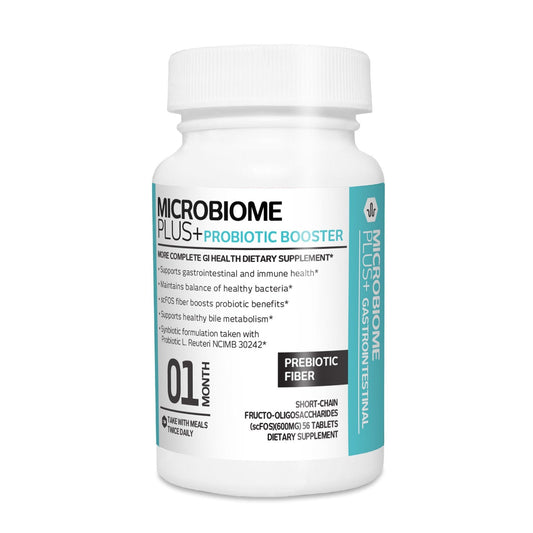
Why we love it: Research-backed scFOS prebiotic fiber that synergizes with any probiotic.*
Who it’s for: Those who don’t get enough fiber in their diet.*
Quality you can trust: Vegan, made in the USA.*
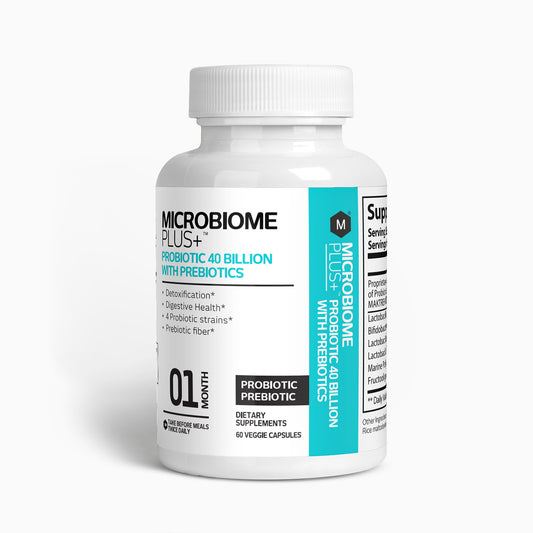
Why we love it: High-strength, research-backed synbiotic blend with broad support for gut, immune, and stress-related health.*
Who it’s for: Those looking for a broad-spectrum, extra-strength probiotic.*
Quality you can trust: Maktrek® Bi-Pass Technology ensures probiotics reach your gut alive.*
How to Choose the Best Supplement for Bloating and Gut Health for You
No two guts are alike. The best supplement for bloating and gut health depends on your unique symptoms, diet, and lifestyle.
Identify Your Main Symptoms
It helps to map out your main symptoms to get some clues:
- Occasional bloating after certain meals → digestive enzymes may help.*
- Chronic or daily bloating → probiotics or synbiotics may help.*
- Irregularity or constipation → prebiotic fiber may help.*
Consider Your Lifestyle and Dietary Needs
You should take your diet and food preferences into account when choosing a supplement for bloating.
For example, if you struggle to get enough fiber on a daily basis, adding a prebiotic fiber supplement can help. Also, if you frequently travel or want to have your probiotic on the go, shelf-stable probiotics may be ideal.
If you’re sensitive to dairy, gluten, or FODMAPs, check ingredient labels to make sure the product you wish to take doesn’t contain them.
Check Supplement Labels
It’s critical to carefully check the labels of supplements.
When choosing a probiotic, you want to make sure that the exact probiotic strain is listed and that its strength is specified (in CFUs or colony forming units). Probiotic benefits are often strain-specific, so you want to choose a clinically researched strain that supports your health needs.
If you’re planning on taking digestive enzymes, the strength should be listed specific to the type of enzyme. For example, the strength of proteolytic enzymes like protease should be given in HUT (Hemoglobin Unit Tyrosine), while bromelain strength should be listed as GDU (Gelatin Digesting Unit).
Make sure to take all supplements at the recommended daily dosage.
Check Quality and Safety
Reputable brands have high standards for labeling transparency, manufacturing standards, and third-party testing.
When you have gut issues, you don’t want to risk taking anything that contains synthetic, untested, or potentially triggering compounds. At Microbiome Plus+, we take quality and gut health seriously. You can rest assured that you are getting superior quality, professional-grade, pure products.
Always talk to your doctor or pharmacist before starting a new supplement, especially if you take medications or have underlying health conditions. Supplements work best when combined with healthy eating, stress management, hydration, and regular movement.
How to Use Our Probiotics, Synbiotics, Prebiotics & Digestive Enzymes
Probiotics and Synbiotics
We recommend taking our probiotic and synbiotic blends shortly before or with a high-carb light meal (containing >1% fat) to boost survivability and bypass the harmful effects of stomach acid (5).
For the best results, don’t take our probiotics and synbiotics with or several hours after heavy meals. Four to five hours can pass before the contents of heavy meals reach the colon, so even delayed-release capsules may free the probiotic too early.
For optimal results, pair probiotics with a diet rich in prebiotic fiber or consider synbiotic supplements that contain prebiotics (6).
To help probiotics achieve lasting benefits and colonize your gut microbiome, consider adding polyunsaturated fatty acids (PUFAs) and omega-3 fatty acids to your diet or supplement regimen (7–9).
Remember that consistency is key with probiotics. Don’t give up after a week or two. Most clinical trials with probiotics last at least 4 weeks. Clinical trials that achieved results with our L. Reuteri NCIMB 30242 lasted for 6 to 9 weeks.
Prebiotics
Prebiotics work best when taken with fiber-rich meals.
If you’re taking our standalone scFOS prebiotic supplement, we recommend 1–3 prebiotic tablets with your first meal of the day and 1–3 tablets with your second or third meal.
Adapt your prebiotic dosage to your dietary fiber intake (lower dose if your dietary fiber intake is high).
Prebiotic fiber attracts and soaks up water, so be sure to drink at least one glass of water along with your prebiotic.
Prebiotics are not only great for gut health, but they’re also a potential way to overcome mineral deficiencies. That’s why we recommend combining our scFOS prebiotic supplement with mineral-dense meals or, alternatively, mineral dietary supplements (10).
If you take medications, space them at least two hours away from the prebiotic. Prebiotic fiber isn’t digested, so it can bind to medications and affect their effectiveness. Consult your doctor or pharmacist before adding a prebiotic supplement to your regular medications to avoid any potential interactions (11).
Most studies report results with prebiotics after 5-6 weeks of supplementation. Be sure to track when you started taking prebiotics and be consistent (10).
Digestive Enzymes
Digestive enzymes need to be taken with food to have an effect. Broad-spectrum digestive enzymes like those in our blend can be taken with most foods, so you don’t have to overthink it.
You may not need to take digestive enzymes with every meal, depending on your food intolerances.
As a rough rule, if you’re about to eat a meal that’s high in foods you don’t tolerate well, supplementing is usually a good idea.
There might be only a couple of foods that you don’t tolerate and eat only occasionally. If so, you can take digestive enzymes only with those meals.
On the other hand, you may have trouble digesting most foods that you eat on a daily basis. If that’s the case, you may want to take enzymes regularly with each meal.
We recommend regularly supplementing for at least two to three weeks if you have daily indigestion and don’t tolerate most foods.
Wrap-Up
Bloating doesn’t get the attention it deserves. It’s often tied to other gut imbalances, and it can take a toll on your overall health. Bloating can be tough, persistent, and frustrating.
Rebuilding your gut health isn’t about quick fixes. It takes a holistic approach that includes lifestyle changes, dietary modifications, and targeted supplementation.
At Microbiome Plus+, we believe that good health starts in the gut. Our collection highlights some of the best supplements for bloating, gut health, and digestive comfort. Our digestive enzymes, prebiotics, and probiotics are chosen for their quality and scientifically backed benefits to support healthy digestion and gut health.*
Aside from providing support for occasional bloating and gas, our formulas are designed to support gut microbiome balance and overall well-being. Every product is made with clinically supported ingredients in cGMP-certified facilities, so you can feel confident choosing what works best for your gut.
FAQ
What is the best supplement for bloating?
While there isn’t one “best” bloating supplement for everyone, digestive enzymes and probiotics are our top picks. Together, they support digestion and gut health to help with occasional and mild bloating.
If you were to pick just one, the choice may come down to needing occasional support when eating certain foods you’re sensitive to (digestive enzymes may work better) vs. daily and long-term digestive and gut lining support (probiotics may be a better choice).
The main difference comes down to the fact that digestive enzymes provide symptomatic relief, but you need to keep taking them to get the benefits. They don’t “fix” underlying gut issues. Once you stop taking them, your bloating is likely going to return (unless you did something to address it).
Probiotics, on the other hand, work to reset your gut. After taking them for long enough, your gut microbiome should become more balanced. Probiotics can colonize your gut, and they can increase the number and diversity of your gut microbiome. So, once you stop taking them, your gut should be more resilient. This makes probiotics long-term players that may act on the underlying cause of your bloating and gut issues.
What vitamin helps to get rid of bloating?
Vitamins can’t help you get rid of bloating, but they may help you overcome deficiencies due to poor gut health and support normal digestion, gut motility, and overall health. Commonly used vitamins for gut health include vitamin B12 and vitamin D.
Magnesium (not a vitamin but a nutrient) may also help, especially if you struggle with constipation. If you’re prone to constipation, magnesium citrate may be helpful as it acts as a laxative. However, if you’re prone to diarrhea, you want to avoid this form of magnesium and opt for magnesium glycinate instead.
How do I reset my gut and digestive system?
Resetting your gut requires taking a holistic look at your overall gut health, diet, and lifestyle. It takes true detective work and no single supplement can solve it.
We recommend building consistent healthy habits—balanced nutrition, hydration, fiber intake, and probiotic-rich foods—along with targeted supplements that support the gut. You may need to work with an integrative practitioner or dietitian to adapt your diet to your gut health and food sensitivities.
While prebiotic and probiotic supplements are typically an integral part of gut reset protocols, they are only a part of the bigger puzzle.
What can I take daily to prevent bloating?
Most people can benefit from the daily use of probiotics. Broad-spectrum digestive enzymes can also help when taken as needed alongside meals to support comfortable digestion and regularity.
What are the signs of an unhealthy gut?
It’s not easy to give general signs of an unhealthy gut, as symptoms may differ wildly between people.
Some common digestive indicators include bloating, gas, flatulence, discomfort, irregularity, heartburn, and food sensitivities/intolerances. Other symptoms may include low energy, skin issues, and even frequent infections, mood changes, and unexplained weight changes.
If your symptoms persist or get in the way of your daily activities, consult a healthcare professional.
*This statement has not been evaluated by the Food and Drug Administration. This product is not intended to diagnose, treat, cure, or prevent any disease.
References:
1. Iovino P, Bucci C, Tremolaterra F, Santonicola A, Chiarioni G. Bloating and functional gastro-intestinal disorders: where are we and where are we going?. World J Gastroenterol. 2014;20(39):14407-14419. doi:10.3748/wjg.v20.i39.14407
2. Oh JE, Chey WD, Spiegel B. Abdominal Bloating in the United States: Results of a Survey of 88,795 Americans Examining Prevalence and Healthcare Seeking. Clin Gastroenterol Hepatol. 2023;21(9):2370-2377. doi:10.1016/j.cgh.2022.10.031
3. Abdominal bloating: MedlinePlus Medical Encyclopedia. medlineplus.gov. https://medlineplus.gov/ency/article/003123.htm
4. Crucillà S, Caldart F, Michelon M, Marasco G, Costantino A. Functional Abdominal Bloating and Gut Microbiota: An Update. Microorganisms. 2024;12(8):1669. Published 2024 Aug 14. doi:10.3390/microorganisms12081669
5. Tompkins TA, Mainville I, Arcand Y. The impact of meals on a probiotic during transit through a model of the human upper gastrointestinal tract. Benef Microbes. 2011;2(4):295-303. doi:10.3920/BM2011.0022
6. Markowiak P, Śliżewska K. Effects of Probiotics, Prebiotics, and Synbiotics on Human Health. Nutrients. 2017;9(9):1021. Published 2017 Sep 15. doi:10.3390/nu9091021
7. Bomba A, Nemcová R, Gancarcíková S, Herich R, Guba P, Mudronová D. Improvement of the probiotic effect of micro-organisms by their combination with maltodextrins, fructo-oligosaccharides and polyunsaturated fatty acids. Br J Nutr. 2002;88 Suppl 1:S95-S99. doi:10.1079/BJN2002634
8. Bomba A, Nemcová R, Gancarcíková S, et al. The influence of omega-3 polyunsaturated fatty acids (omega-3 pufa) on lactobacilli adhesion to the intestinal mucosa and on immunity in gnotobiotic piglets. Berl Munch Tierarztl Wochenschr. 2003;116(7-8):312-316.
9. Han S, Lu Y, Xie J, et al. Probiotic Gastrointestinal Transit and Colonization After Oral Administration: A Long Journey. Frontiers in Cellular and Infection Microbiology. 2021;11. doi:https://doi.org/10.3389/fcimb.2021.609722
10. Costa GT, Vasconcelos QDJS, Abreu GC, Albuquerque AO, Vilar JL, Aragão GF. Systematic review of the ingestion of fructooligosaccharides on the absorption of minerals and trace elements versus control groups. Clin Nutr ESPEN. 2021;41:68-76. doi:10.1016/j.clnesp.2020.11.007
11. González Canga A, Fernández Martínez N, Sahagún Prieto AM, et al. Dietary fiber and its interaction with drugs. Nutr Hosp. 2010;25(4):535-539.
Written by Ana Aleksic, MSc (Pharmacy)
Ana is an integrative pharmacist, scientist, and herbalist with many years of medical writing, clinical research, and health advising experience. She loves communicating science and empowering people to achieve their optimal health. Ana has edited 1000+ and written 500+ posts, some of which reached over 1 million people. She has also authored several ebooks and book chapters. Her specialties are dietary and herbal supplements, women’s health, and human microbiome science. She is also a women's health coach and a strong advocate of bridging scientific knowledge with holistic medicine.